

The Nordis Law – a Mirage of Our Times?
January 3, 2026 / Doru Lalău, Costin Ștefan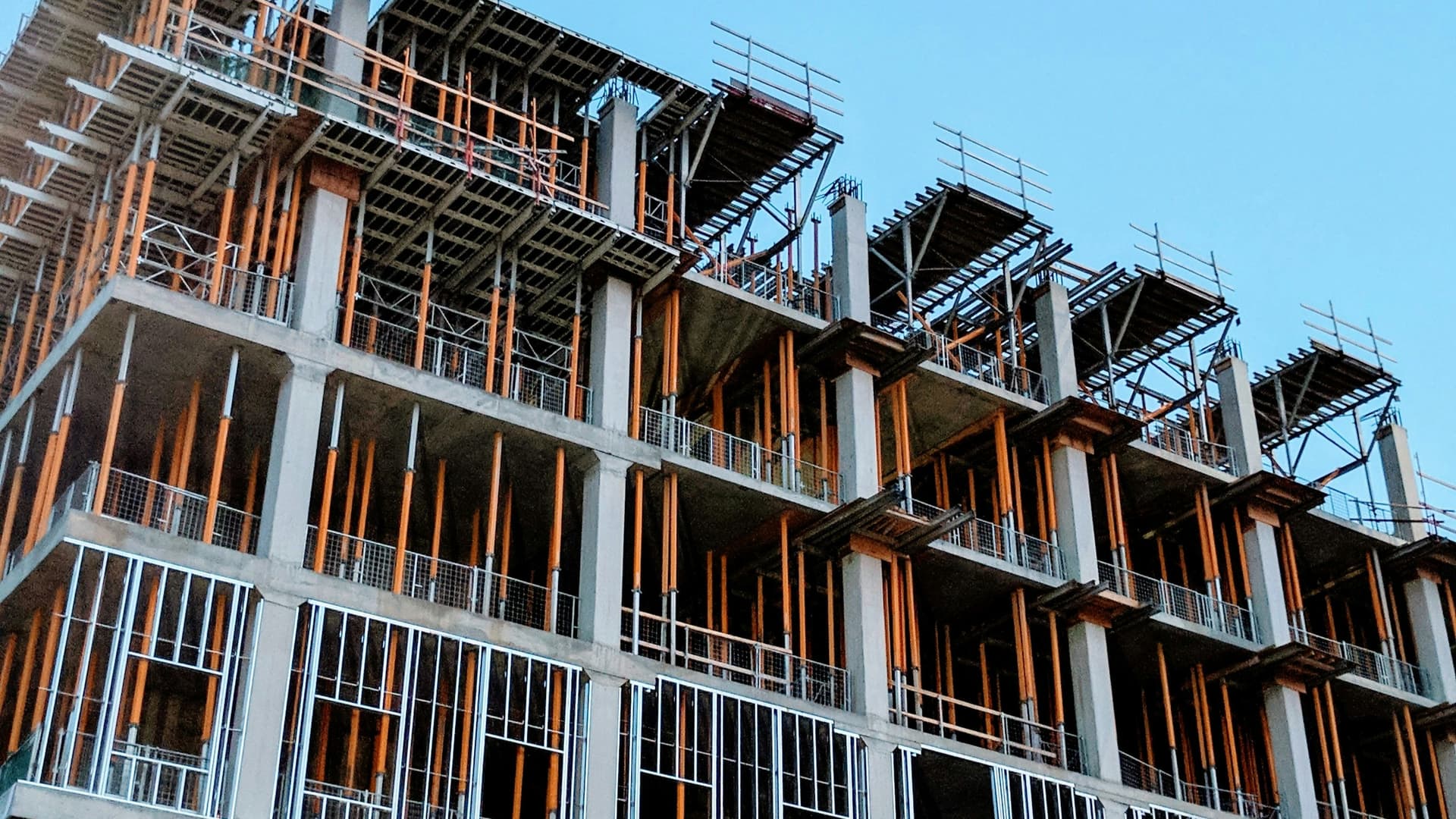
Today, more than a year after public opinion vehemently demanded the adoption of real reforms in the real estate sector, we have set out to take stock of the attempts to correct the legislative gaps in this field.
Over the past year, various proposals have emerged aimed at limiting the buyer’s risk when concluding sale-purchase promises for apartments in unfinished projects. Some of these proposals were moderate, others radical or difficult to implement.
Bill L36/2025, registered with the Senate of Romania, proved to be a balanced bill, capable of satisfying consumers’ needs without subjecting real estate developers to disproportionate obligations. Moreover, in a previous interview, I emphasized precisely the fact that the change, although it provided less severe restrictions for developers than what was circulating in the public sphere at that time, is welcome and could at least partially resolve the risk of real estate developers’ insolvency.
However, following the debates held in the Chamber of Deputies, 24 amendments were adopted, with the very legal texts that provided clear and efficient mechanisms for consumer protection being modified. In this way, the mechanisms initially proposed became impossible to apply or even eliminated entirely. Interestingly, despite public support, it appears that none of the decision-makers opposed this effort to amend the initial version, as evidenced by the transcript of the plenary session. The law was ultimately adopted by the Chamber of Deputies with a unanimous vote.
In what follows, we wish to focus on the amendments that, in our opinion, mimic the most important reform proposed by the bill adopted by the Senate.
In its initial form, the bill would have amended Law no. 10/1995, adding to art. 22 the following paragraph ”(6) The amounts paid by the buyer as an advance within the sale promise/purchase promise/bilateral sale-purchase promise are deposited in a bank account opened in the name of the real estate developer, in any currency and may be spent by the developer only for the purpose of real estate development. The maximum percentage of the total price that the developer can request as an advance is limited according to the construction stage as follows: 15% upon conclusion of the sale promise/purchase promise/bilateral sale-purchase promise, 25% upon completion of the structural framework, 25% upon completion of installation works.”
Thus, although there could have been some difficulties such as defining the moment of completion of installation works, the project established a mechanism by which developers were imposed limits regarding the advance they can request from buyers, with the latter being granted additional, absolutely necessary protection.
Currently, the legislator has limited to 5% of the price the amount paid by consumers as a reservation, but also the period in which this limitation would be effective, namely for a maximum of 60 days. Upon expiration of the 60 days, the consumer is forced to conclude either a promise (therefore an operation distinct from that of reservation), or the sale contract, if possible.
Regarding sale-purchase promises, the law promulgated by the President, therefore the form in which it will enter into force on December 11, 2025, after publication in the Official Gazette no. 1133 dated December 8, 2025, provides that: ”(6) The amounts paid by the buyer as an advance within the sale promise/purchase promise/bilateral sale-purchase promise are deposited in a separate bank account of the developer, dedicated to the construction of the project for which the advance was paid, and may be spent by the developer only for the purpose of developing that project and only with the 'approved for payment' stamp of the responsible person/site supervisor, for the structural part maximum 25% of the price and after its completion, for the installations part maximum 20% of the price.”
Therefore, it can be observed that the legislator has abandoned the clear and unequivocal formulation contained in the bill and has instead opted for an incoherent formulation that deprives the initially announced reforming intention of effects. From the first reading of the legal text, we note that the mechanism of limiting the amount of advance that the developer can collect according to the project stage has been eliminated, attempting, we assume, only to impose a maximum percentage that can be spent by the developer from the revenues realized from collecting advances.
However, given the unclear formulation of the text, we wonder how such a system would work in practice and what could be the benefits of this mechanism compared to that of limiting the amounts that can be claimed as an advance and which, ultimately, expose potential buyers to risks such as those materialized in the Nordis case. From the way this paragraph was drafted, one can easily reach the conclusion that developers could continue to request from buyers the payment of an advance of 90% of the value of the future apartment, even if the promised property is still at the project stage. Practically, the only difference from the current situation is the developer’s obligation to deposit these amounts in a separate account, dedicated to the construction of the project, and to partially use the amounts for certain specific activities/stages.
Going further, we observe that the legislator understood to condition the release of amounts from this account on the approval of the site supervisor. However, it must be mentioned that the site supervisor is, ultimately, a person chosen and employed by the developer. We therefore wonder whether their assessment will also benefit from guarantees of objectivity or whether the legislator has again left open a path to potential abuses.
We cannot ignore that part of the legal text according to which ”The amounts paid by the buyer as an advance (...) may be spent by the developer only for the purpose of developing that project (...) for the structural part maximum 25% of the price and after its completion, for the installations part maximum 20% of the price.” Unfortunately, this formulation is also ambiguous and susceptible to multiple interpretations – and not all in favor of the promising buyers.
If we were to refer to the not-so-hypothetical situation in which a developer requests an advance of 90% of the value of the future apartment, this would mean that only 25% of this amount can be used for works on the structural framework, and 20% for the installations part. The rest is silence.
(Photo by Tolu Olubode on Unsplash)
Related Articles

AI Vendor Due Diligence: What Companies Should Check Before Signing the Contract
September 4, 2026